
"China coffee standards"
3000 article(s) found

Fine Coffee Culture Development of domestic Coffee and baristas
Recently, there are many international topics in the domestic coffee circle, no matter in terms of technology, equipment, activities, competitions, etc., are increasingly in line with international standards, including the recently concluded Melbourne World barista Competition and the Fushan Coffee Cup International barista Championship held in Hainan, followed by the World Coffee draw Competition held in France at the end of the month and the China selection of the World siphon Pot Competition held in Pu'er, China.

Barista course International Coffee dispenser Certification course
The British City Professional Association (City Guilds) is the most prestigious and largest professional qualification awarding body in the UK. It is also the largest international accreditation and accreditation body in the world. China Special Coffee Association is the only barista training and assessment centre of the British City Professional Association (City Guilds) in Chinese mainland, No:820240

Japan UCC Ueshima Coffee Co., Ltd. Ueshima Coffee Shanghai Co., Ltd. Top Ten Books in the World
Coffee is one of the top three drinks in the world. At first, coffee was expensive in Europe. Only aristocrats could drink coffee. Coffee was even called black gold. Coffee, whose price fell as a result of mass production, began to become an important drink for Europeans. Zhong Lirong, vice president of the China Coffee and Coffee Beverage Professional Committee, said in an interview

Which company owns Berry Coffee? How many stores of Berry coffee in China have the flavor characteristics of Berry coffee beans
I don't know when another independent cafe with a new brand appeared on the streets of Shanghai. it only learned after some understanding that Berry Coffee BELRAYCOFFEE, the popular national cafe in Shanghai's Mudu, was Dingxin International Group after Dexin, the whole family convenience store and Master Kang's private cattle.

Development Strategy of Coffee Industry in Yunnan
First, the course of coffee industry in Yunnan (1) A brief history of the introduction of coffee in Yunnan is the product of foreign missionary work. After Burma became a British colony, British missionaries went to the Kachin region of Myanmar to preach, and the missionaries grew coffee for their own use. Then the Jingpo people in this area gradually began to grow coffee. As the Jingpo people live across borders, with the exchange of visiting relatives and friends, intermarriage and exchange, coffee comes in.
Nestl é says the domestic gold medal coffee is produced in Japan with high quality and safety.
Recently, the Food Standards Agency in the UK has tested 248 food samples and found that the levels of acrylamide, a carcinogen in 13 kinds of food, are on the rise. Many well-known food companies, such as Nestl é and Heinz, have been warned by the British Food Standards Agency that excessive varieties include potato chips, instant coffee and crackers. Nestl é China said that Nestle products are up to standard and safe.
Luckin Coffee's financial results for the new quarter are eye-catching, and his income is close to that of Starbucks!
For a long time, people's impression of Luckin Coffee is "China's Starbucks". Since Luckin Coffee turned a profit for the first time in the first quarter of this year, the number of stores has surpassed that of Starbucks in China, and Luckin Coffee has become the largest coffee chain in China. A quarter has passed, and Luckin Coffee's performance is still dazzling.
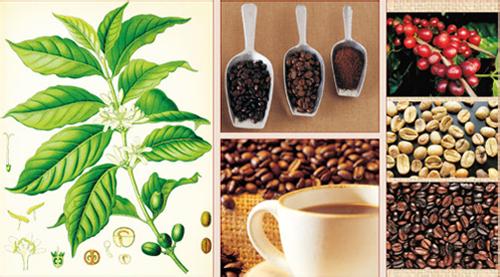
High-yield cultivation techniques of Coffee in Hainan
In order to make the standardized planting technology of coffee easy to learn and understand, the Institute of Flavor and Beverage of the Academy of Thermal Sciences has also compiled "High-yield cultivation techniques of Coffee", "Diagram of High-quality and High-yield cultivation techniques of small-grain Coffee", "Coffee cultivation and Primary processing Technology", "standardized production Technology of small-grain Coffee" and other atlas and books, which are given to coffee planting free of charge. The "breeding of 8 clones of medium-grain coffee" developed by the institute has won the country.

Coffee: a commodity to be awakened by the Chinese factor
Elegant and romantic Starbucks, mellow cafes. What you may not imagine is that behind the quiet and pleasant scene is the choppy coffee market.

The 2018 Asian Coffee Annual meeting will be held in Mangshi, Yunnan Province in November to open a new era of Asian coffee.
Professional coffee knowledge exchange more coffee bean information please follow the coffee workshop (Wechat official account cafe_style) how competitive is Asian coffee in the world? How to promote the voice of Asian coffee in the world coffee pattern? On October 17, the reporter learned from the press conference of the 2018 Asian Coffee Annual meeting that the 2018 Asian Coffee Annual meeting with the theme of Asian Coffee in the New era will be held on November 11.

Pacific Coffee franchise made its debut at Beijing franchise Exhibition.
The Pacific Coffee franchise business has its own coffee shop is the dream of many people who pursue the quality of life. If you happen to have this item on your dream list, maybe now is the best time to make your dream come true. Pacific Coffee was born in Hong Kong in 1992 and was acquired by China Resources Venture in 2010. It is currently the only coffee chain brand under China Resources Group. It's all over the world.

Starbucks faces challenges: multi-coffee brands compete for the Chinese market, coffee is very popular
Multi-coffee brands compete for the Chinese market Starbucks faces challenges Starbucks is always a brand with no lack of topics. Recently, there are media reports in the United States, a Chicago woman sued Starbucks for $5 million because there were too many ice cubes in cold drinks. The news drew attention to Starbucks, which was widely questioned about its high pricing in China. There is more in one drink.
The "domestic Coffee text" is a sponge that has been rapidly absorbed and fully received from all over the world.
According to the relevant data, the consumption of coffee in China is still in the budding stage. With the continuous development of the national economy, the continuous improvement of living standards, the change of people's consumption concepts and living habits, as well as the diversification of coffee culture, coffee economy does have unlimited room for development. It can be expected that China will become the world's largest coffee consumer rather than a producer.

The price of Yunnan coffee is Yunnan coffee expensive?
Professional coffee knowledge exchange more coffee bean information please follow the coffee workshop (Wechat official account cafe_style) in metropolises, tens of yuan a cup of coffee is rare. However, in Yunnan Province, the main coffee producing area in China, the purchase price of coffee beans is about 15 yuan per kilogram. According to the figures released by the Yunnan Coffee Association, enterprises bought from farmers during the 2015-2016 harvest season.

Starbucks faces Challenge: multi-Coffee Brands compete for Chinese Market
Starbucks is always a brand with no shortage of topics. Recently, there are media reports in the United States, a Chicago woman sued Starbucks for $5 million because there were too many ice cubes in cold drinks. The news drew attention to Starbucks, which was widely questioned about its high pricing in China. A large amount of money is claimed for more ice in a drink, which is for Chinese consumers

Starbucks faces Challenge Multi-Coffee Brands compete for Chinese Market
Multi-coffee brands compete for the Chinese market Starbucks faces challenges Starbucks is always a brand with no lack of topics. Recently, there are media reports in the United States, a Chicago woman sued Starbucks for $5 million because there were too many ice cubes in cold drinks. The news drew attention to Starbucks, which was widely questioned about its high pricing in China. There is more in one drink.

Starbucks faces Challenge: multi-Coffee Brands compete for Chinese Market
Multi-coffee brands compete for the Chinese market Starbucks faces challenges Starbucks is always a brand with no lack of topics. Recently, there are media reports in the United States, a Chicago woman sued Starbucks for $5 million because there were too many ice cubes in cold drinks. The news drew attention to Starbucks, which was widely questioned about its high pricing in China. There is more in one drink.

Will "Coffee accompany you" come to an end in China?
Coffee accompanies you (Caffebene) Korean Coffee Coffee accompanies you (Caffebene), which has been in China for just 3 years, and is praised by the industry for its rapid expansion. However, at the end of 2014, there were a series of problems such as crazy closure of coffee with you across the country, arrears of wages, arrears of payment to suppliers, deception of franchisees and so on. A letter of "Coffee to accompany your partner"

The Chinese coffee market has entered a white-hot stage due to the dispute between the three major factions of Chinese cafes
At present, China's per capita coffee consumption is 5 cups per year, which is far lower than that of Japan and South Korea, with an average of about 300 cups per person per year. However, coffee consumption in China continues to grow at an annual rate of 15% to 20%, making it the world's most potential coffee consumer. In the current Chinese market, carving time into the Internet, Starbucks vigorously do direct sales,
Multi-coffee brands compete for the Chinese market to accelerate the fierce competition for investment in China.
Hu Lu, deputy secretary general of Yunnan Coffee Association, told reporters: Starbucks' high price makes coffee a luxury. The third space it creates gives Starbucks the strength to set higher prices. Wang Zhendong, secretary general of the Shanghai Coffee Association, believes that early entry into the Chinese market has given Starbucks a monopoly position, but Starbucks' advantage lies in quality management, which represents standardization.